
 Save
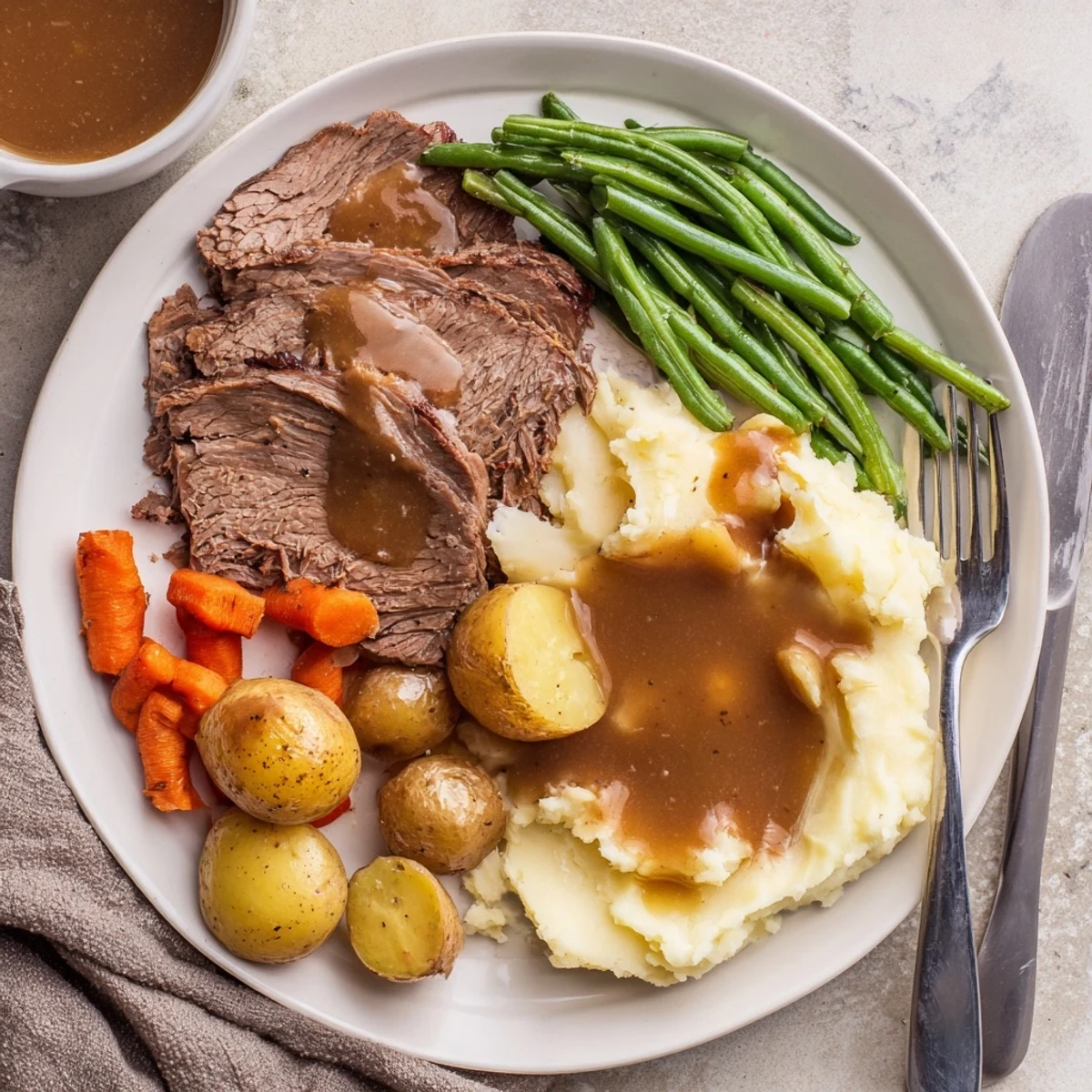
Save This hearty Southern classic features a fork-tender beef chuck roast, braised slowly for three hours with onions, carrots, celery, and baby potatoes in a savory beef broth infused with Worcestershire sauce, thyme, and rosemary. The rich, velvety gravy is made from the braising juices, perfectly complementing the buttery mashed potatoes and crisp-tender green beans. The long, slow cooking process transforms tough beef into meltingly tender meat, while the vegetables absorb all the savory flavors of the braising liquid.
My grandmother would start this roast on Sunday mornings before church, letting that rich beef aroma work its way through the whole house. By the time we walked through the door, the gravy had already thickened to perfection and those baby potatoes were practically melting into the sauce. I've spent years trying to recreate that particular magic that happens when beef meets onions and slow heat.
Last winter, during that terrible ice storm that kept us housebound for three days, this roast fed our entire extended family who'd somehow converged on our kitchen. My cousin stood by the Dutch oven with a spoon, tasting the gravy every twenty minutes and declaring it almost ready. We ate off mismatched plates, crowded around the coffee table, and nobody mentioned being stuck inside once.
Ingredients
- Beef chuck roast: The marbling in this cut melts during braising, creating that fork-tender magic that falls apart at the slightest touch
- Kosher salt and black pepper: Don't skip getting seasoning into every nook and cranny, this builds the flavor foundation
- Vegetable oil: You need something with a high smoke point for that proper sear that creates depth
- Yellow onion and garlic: These aromatics become the backbone of your sauce as they break down slowly
- Carrots and celery: They sweeten the broth while absorbing all that beefy goodness
- Baby potatoes: Small potatoes hold their shape better and soak up the braising liquid beautifully
- Beef broth and water: The liquid that carries all those flavors together
- Worcestershire sauce: This adds that umami richness that makes people ask what your secret is
- Dried thyme and rosemary: Classic herbs that bloom in the slow heat of the oven
- Bay leaves: Don't forget to fish these out before serving
- Cornstarch slurry: The magic that transforms your braising liquid into actual gravy
- Russet potatoes: These mash up fluffy and light, the perfect canvas for all that butter
- Whole milk and butter: What makes mashed potatoes worth eating
- Fresh green beans: A bright, fresh contrast to all that rich comfort food
Instructions
- Get your oven ready:
- Preheat to 325°F and position your rack in the center where heat circulates most evenly
- Season the meat generously:
- Pat that roast completely dry with paper towels, then work the salt and pepper into every surface
- Build the foundation:
- Heat oil in your Dutch oven until it shimmers, then sear the roast on every side until you've got a beautiful dark crust
- Wake up the aromatics:
- Cook onions and garlic in those browned bits on the bottom of the pot, scraping up all that flavor
- Add the supporting players:
- Toss in carrots, celery, and halved baby potatoes, stirring them around to pick up all those good pan juices
- Bring it all together:
- Nestle that seared roast back into the vegetables, then pour in your broth mixture and herbs
- Let the oven do its work:
- Cover tight and slide it into the oven for at least two and a half hours, checking tenderness around hour two
- Make the sides while you wait:
- Boil russet potatoes until they surrender to a fork, then mash them with plenty of butter and warm milk
- Green beans keep it fresh:
- Steam or boil them just until they're bright and tender, then toss with butter and garlic powder
- Transform the juices into gravy:
- Whisk your cornstarch mixture into the simmering pot liquid and watch it thicken into something magnificent
 Save
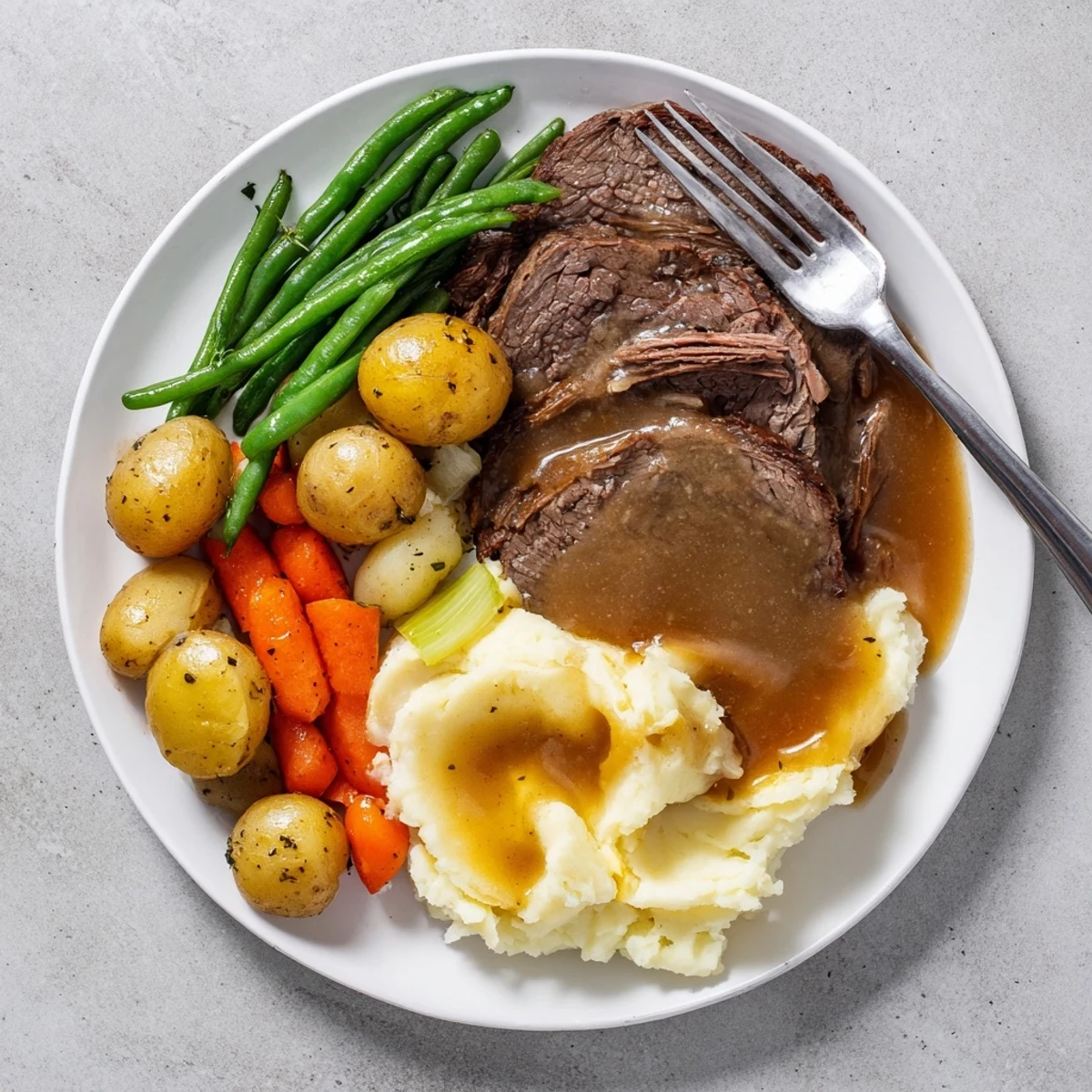
Save Something about putting a platter of pot roast in the middle of a table changes the whole energy of a meal. People lean in, conversations get a little quieter, and suddenly everyone's eating a bit more slowly. This is the food that turns dinner into an occasion without anyone trying.
Making It Ahead
The beautiful thing about pot roast is it actually tastes better the next day. Make it up to three days in advance, refrigerate the whole pot, and gently reheat on the stove. The gravy will have thickened even more, and those flavors will have had time to really get to know each other.
Choosing The Right Cut
Chuck roast is ideal because it has enough fat to stay tender through hours of cooking. Round roast will dry out and disappoint you, while brisket needs different handling. Look for marbling throughout and don't trim the fat before cooking, that's where all the flavor lives.
Getting The Gravy Right
The difference between okay gravy and great gravy comes down to patience and heat control. Whisk your cornstarch slurry into vigorously simmering liquid and keep whisking until it's fully incorporated.
- Taste your gravy before thickening, the flavor will concentrate as it reduces
- If it's too thick, thin it with more broth or water, not milk
- A splash of vinegar at the end cuts through all that richness beautifully
 Save
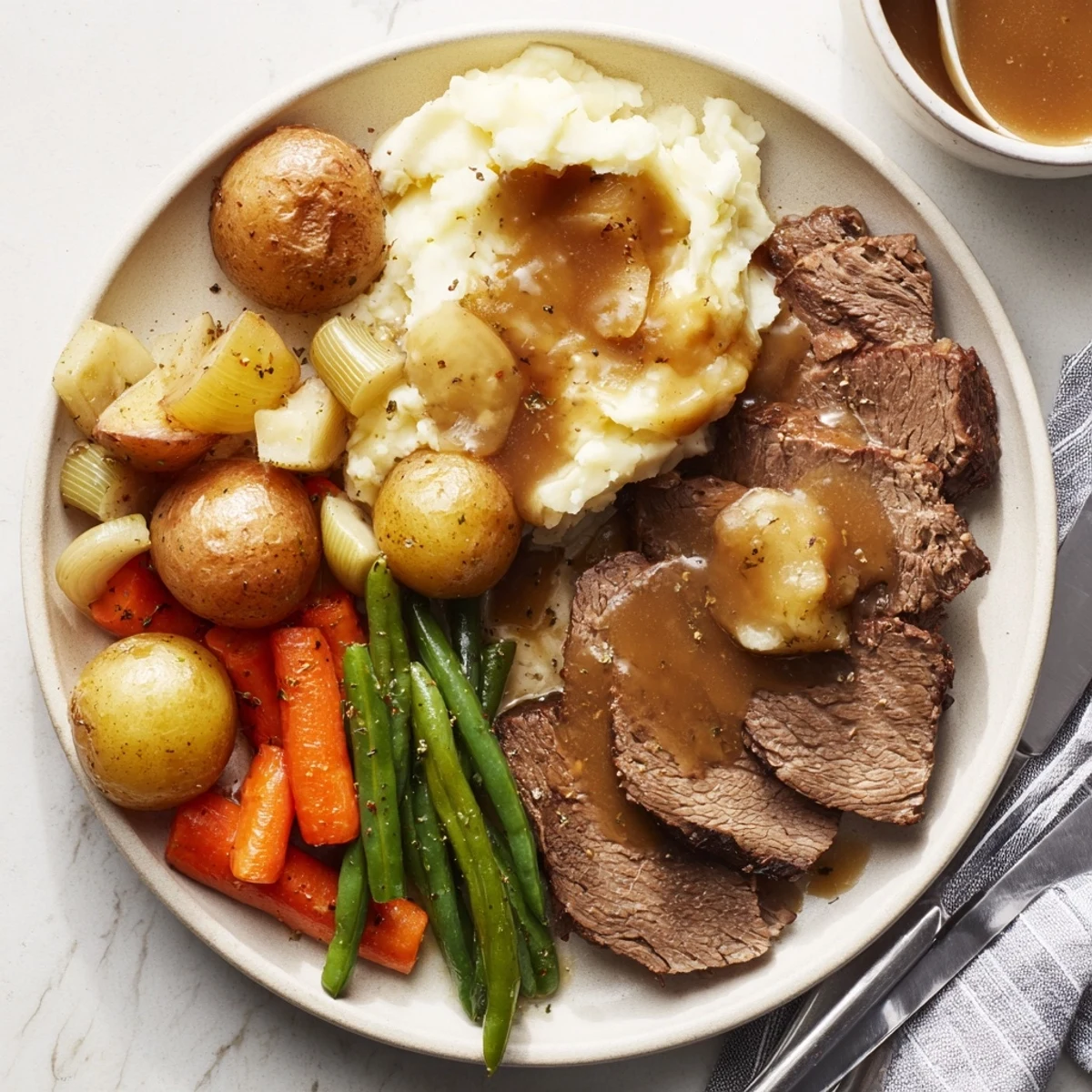
Save There's something deeply satisfying about a meal that takes care of itself in the oven while you handle everything else life throws at you. This is the kind of cooking that feels like giving yourself a proper meal.
Recipe FAQs
- → What cut of beef works best for pot roast?
-
Chuck roast is ideal because it has plenty of connective tissue that breaks down during slow cooking, resulting in tender, flavorful meat. Other good options include brisket or round roast.
- → Can I make this in a slow cooker instead of the oven?
-
Yes, cook on low for 7-8 hours or on high for 4-5 hours. Sear the beef first for best flavor, then transfer everything to your slow cooker.
- → How do I know when the pot roast is done?
-
The beef is ready when it easily shreds with a fork and offers no resistance. This typically takes 2.5 to 3 hours of braising at 325°F.
- → Can I prepare this dish ahead of time?
-
Absolutely. The flavors actually improve when made a day ahead. Cool, refrigerate, then reheat gently on the stovetop or in a 300°F oven until warmed through.
- → What vegetables can I add or substitute?
-
Turnips, parsnips, or sweet potatoes work well. You can also add pearl onions or mushrooms during the last hour of cooking for extra depth.