
 Save
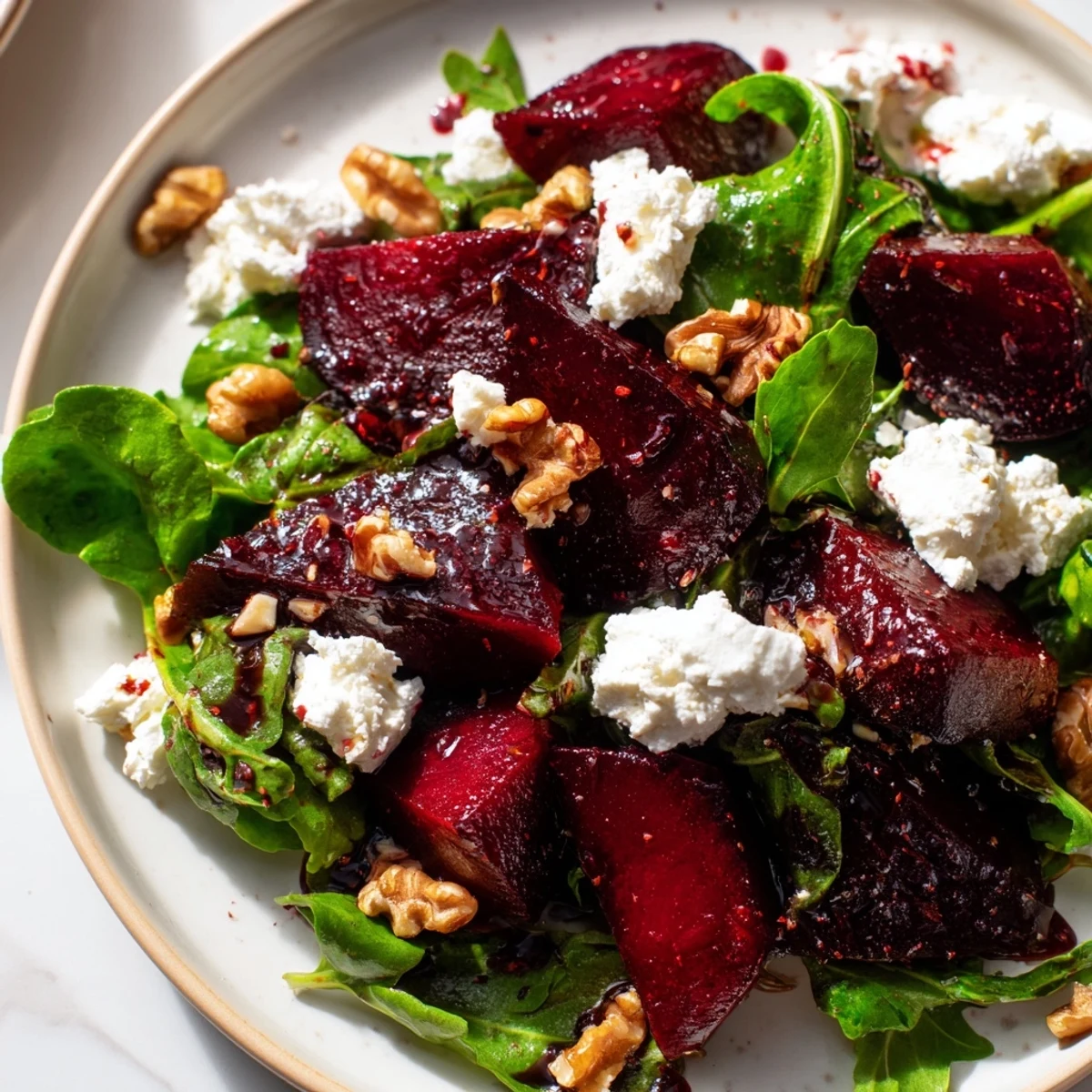
Save Roast fresh beets until tender and pair them with toasted walnuts and creamy goat cheese for a vibrant dish. Whisk together olive oil, balsamic vinegar, Dijon mustard, and honey to create a tangy vinaigrette. Toss mixed greens with the sweet beets and crunchy nuts, then drizzle with dressing for a simple yet elegant salad.
There's something about the moment when you slice into a roasted beet and see that deep crimson interior—it feels like discovering something precious. I first made this salad on a whim, hunting through my fridge for something substantial but light, and found myself captivated by how the earthiness of the beets played against the brightness of goat cheese and the nutty warmth of toasted walnuts. What started as a simple lunch became the salad I kept returning to, season after season.
I remember bringing this to a dinner party at my friend's place, nervous because I wasn't sure salad would feel substantial enough. By the end of the night, someone was scraping the bottom of the bowl to get the last bit of vinaigrette-soaked greens, and I realized this quiet little dish had won everyone over without any fuss.
Ingredients
- Beets: Four medium ones give you that perfect ratio of tender sweetness; don't skip washing them thoroughly since soil can hide in the crevices.
- Mixed salad greens: Use whatever feels fresh in your kitchen—arugula brings a nice peppery bite, but spinach and kale work beautifully too.
- Walnut halves: Toasting them yourself changes everything, releasing oils that make them taste almost buttery.
- Goat cheese: The tanginess cuts through the sweetness of the beets in the most satisfying way; crumble it by hand for irregular, appealing pieces.
- Extra-virgin olive oil: Don't use the cheap stuff here—you'll taste the difference in every bite.
- Balsamic vinegar: This is your secret weapon for depth; a good one makes the whole dressing sing.
- Dijon mustard: Just a teaspoon acts as an emulsifier and adds subtle complexity.
- Honey: A touch of sweetness balances the vinegar's bite.
- Salt and pepper: Taste as you go; these two ingredients do the real work of bringing everything into focus.
Instructions
- Get your oven ready:
- Preheat to 400°F and line a baking sheet with foil—this makes cleanup so much easier later.
- Roast the beets:
- Wrap each beet individually in foil and place on the sheet, then roast for 35–40 minutes until a knife slides through with barely any resistance. The kitchen will smell incredible, sweet and earthy at once. Let them cool just enough to handle, then peel away the papery skin—it should slip off easily.
- Toast the walnuts:
- While beets are roasting, put walnut halves in a dry skillet over medium heat for 3–4 minutes, stirring occasionally until fragrant. This step transforms them from background player to star.
- Build your dressing:
- In a small bowl, whisk together olive oil, balsamic vinegar, Dijon mustard, honey, salt, and pepper until it emulsifies slightly and tastes balanced—a little sharp, a little sweet, a little savory all at once.
- Assemble with intention:
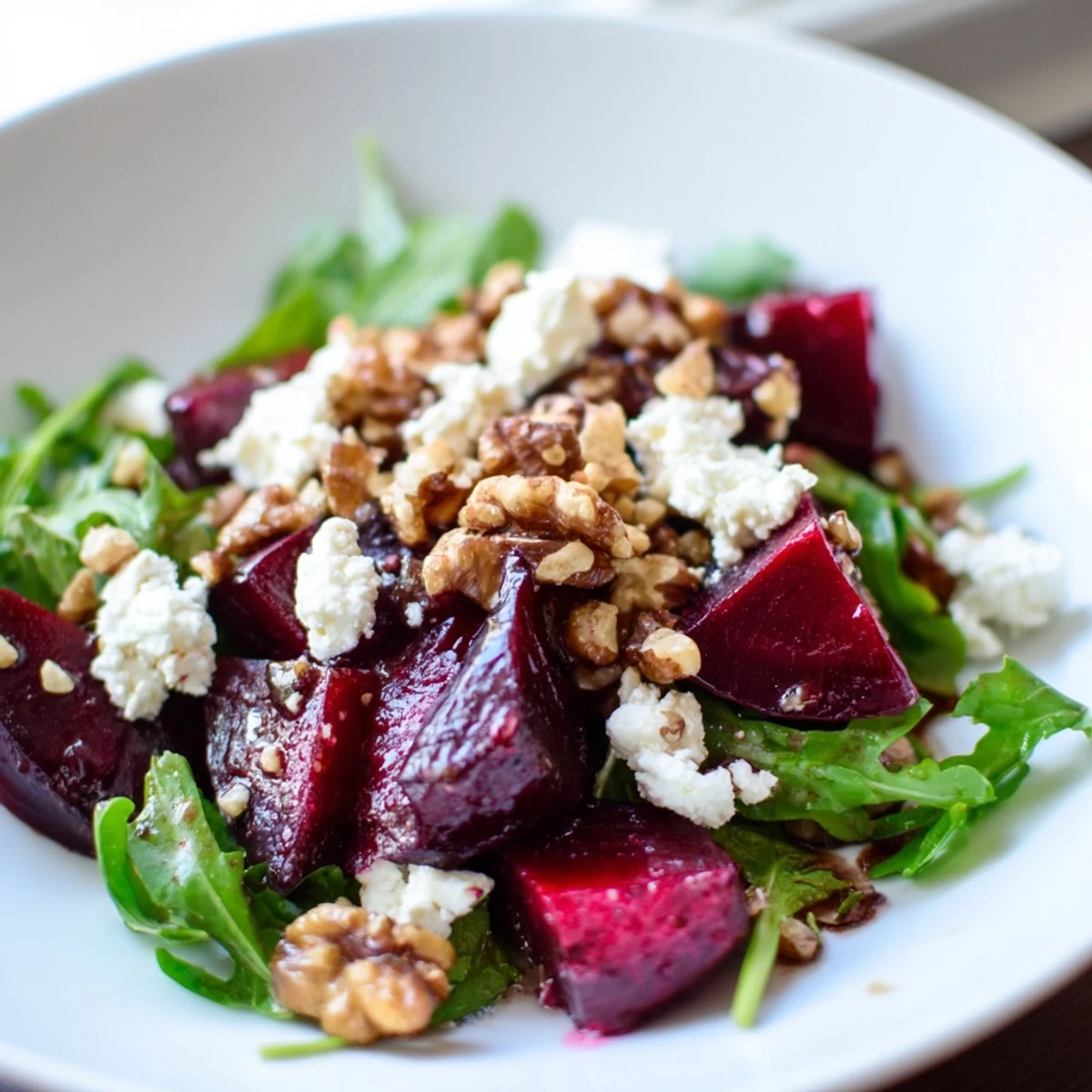
- Toss your greens with half the vinaigrette in a large bowl, then arrange beet wedges on top like you're composing something you want to photograph. Scatter walnuts and crumbled goat cheese across, then drizzle with the remaining dressing so every element gets coated.
- Serve right away:
- The warmth of the beets melts the cheese slightly while the greens stay crisp—timing matters here.
 Save
Save What I love most about this salad is how it shifts with the seasons—lighter in spring with fresh greens, heartier in fall when you're hungry for roasted flavors. It became the dish I turned to when I wanted to feel nourished without feeling weighed down.
Why Beets Are Worth Your Time
Roasted beets taste nothing like canned ones, and I say this gently because we've all been there. When you roast them from scratch, their natural sugars concentrate and caramelize slightly, creating this deep sweetness that pairs so naturally with tangy cheese and nutty textures. The earthiness becomes a feature, not a bug, something that actually makes you slow down and taste what you're eating.
Building Flavor Through Contrast
This salad teaches you something important about eating: that the most satisfying dishes aren't about any single ingredient being incredible, but about how different elements talk to each other. The sweetness of the beets needs the sharpness of vinegar; the creaminess of cheese needs the crunch of walnut and the peppery snap of arugula. Every element has a reason for being there, and removing even one makes the whole thing less interesting.
Variations and Improvisation
I've played with this recipe more times than I can count, and it's forgiving in the best way. Orange slices bring brightness, pears add a subtle sweetness, and crumbled blue cheese instead of goat cheese makes it earthier and more assertive. The core stays the same, but you can make it yours.
- Try swapping the goat cheese for crumbled feta or a sharper blue cheese depending on your mood.
- Add thinly sliced orange or pear for a fruit element that plays beautifully with the earthiness.
- A splash of red wine vinegar mixed into the balsamic adds complexity if you're feeling adventurous.
 Save
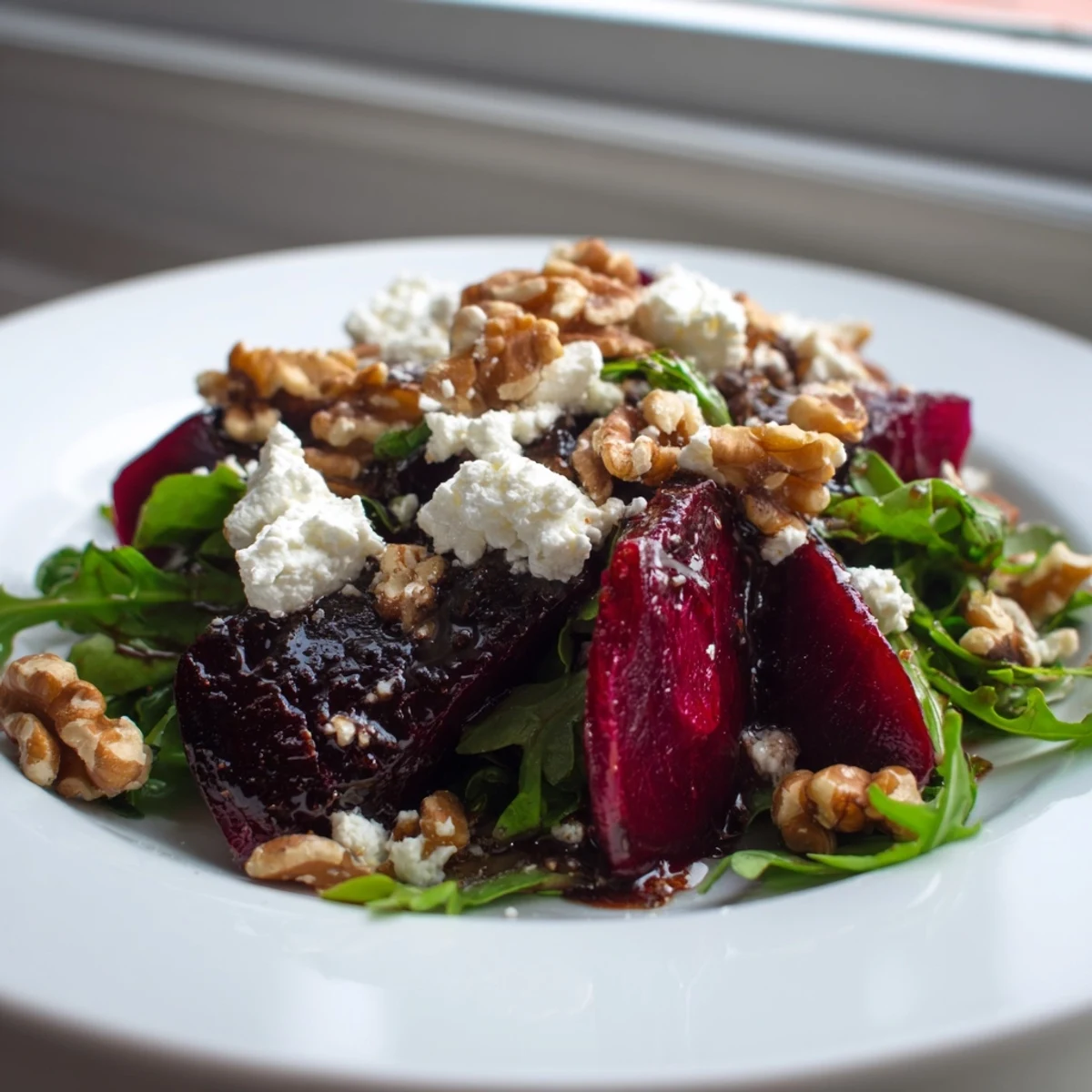
Save This is the salad I make when I want to feel like I'm taking care of myself, when simple ingredients treated with intention somehow become something special. Serve it with crusty bread and a good glass of wine, and you've got the kind of meal that sticks with you.
Recipe FAQs
- → Can I use different types of salad greens?
-
Yes, arugula, spinach, or baby kale are excellent alternatives to mixed greens.
- → How do I know when the beets are done roasting?
-
Pierce the beets with a knife; they are done when it slides in easily with little resistance.
- → What can I use instead of goat cheese?
-
Feta or blue cheese provide a similar creamy texture and salty flavor profile.
- → Is this suitable for vegetarians?
-
Yes, all ingredients are plant-based or dairy, making it vegetarian-friendly.
- → How should I toast the walnuts?
-
Cook walnut halves in a dry skillet over medium heat for 3–4 minutes until fragrant.