
 Save
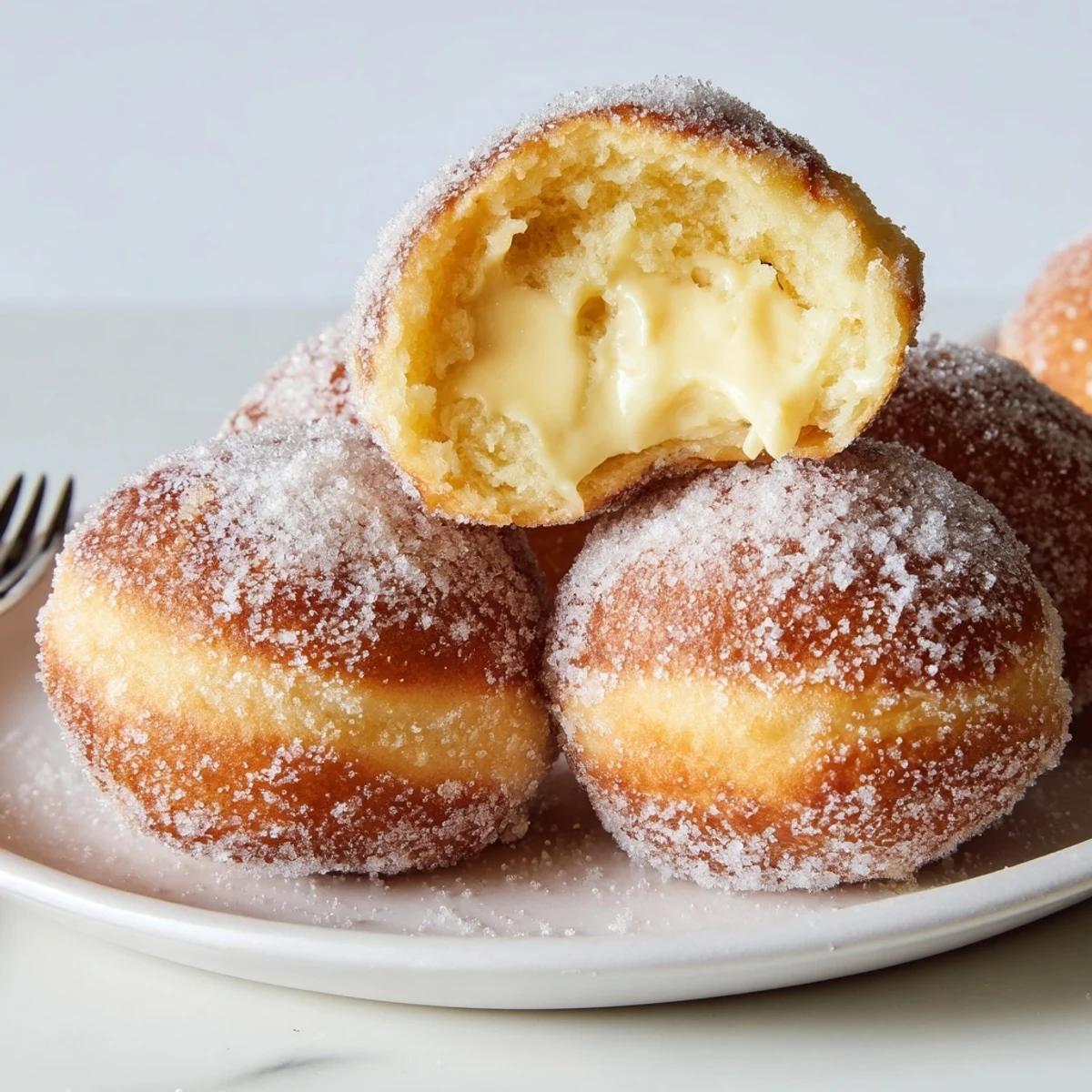
Save These classic Italian treats feature pillowy-soft fried dough generously filled with silky vanilla pastry cream. The dough achieves perfect lightness through proper rising time, while the creamy custard filling balances sweetness with fresh lemon zest and real vanilla. Best enjoyed warm, rolled in granulated sugar, these bakery-style delights capture the essence of Italian pastry craftsmanship.
Standing in my grandmother's tiny kitchen in Florence, I watched her transform simple ingredients into these pillowy cloud-like doughnuts. The scent of frying dough mingling with citrus zest became my definition of comfort. She taught me that bomboloni require patience—you can't rush the rising process, and you certainly can't resist eating them warm.
Last Christmas morning, I made a batch for my family's brunch. My dad, usually not one for sweets, ate three in quick succession while pretending to help me fill them. There's something magical about watching people's eyes light up when they bite into that first burst of cream. It's become our new holiday tradition.
Ingredients
- 500 g all-purpose flour: The foundation of your dough—bread flour works too for extra chewiness
- 60 g granulated sugar: Feeds the yeast and adds subtle sweetness to the dough
- 7 g instant dry yeast: One standard packet gives reliable rise every time
- 200 ml whole milk, lukewarm: Should feel like bath temperature—too hot kills yeast
- 60 g unsalted butter, softened: Creates tender dough and rich flavor
- 2 large eggs: Room temperature eggs incorporate more evenly
- 1 tsp vanilla extract: Pure extract makes a noticeable difference
- 1/2 tsp salt: Enhances all the other flavors
- Zest of 1 lemon: Freshly grated brings bright aromatic notes
- 500 ml whole milk: Full milk creates the silkiest pastry cream
- 4 large egg yolks: The yolks do all the heavy lifting for richness
- 100 g granulated sugar: Sweetens the cream without overpowering
- 40 g cornstarch: The thickening magic that transforms milk into custard
- 1 tsp vanilla extract: Don't skimp—this is the star flavor
- Zest of 1/2 lemon: Subtle brightness that cuts through richness
- 30 g unsalted butter: Adds glossy finish and smooths texture
- Vegetable oil: Neutral oil with high smoke point is essential
- 100 g granulated sugar: For coating—extra fine sugar adheres beautifully
Instructions
- Mix the dough foundation:
- Combine flour, sugar, yeast, and salt in a large bowl and whisk together to distribute everything evenly
- Prepare the wet ingredients:
- Whisk lukewarm milk, eggs, vanilla extract, and lemon zest until blended and slightly frothy
- Bring dough together:
- Pour wet mixture into dry ingredients, mix with a wooden spoon until shaggy, then add softened butter
- Knead to develop gluten:
- Work the dough for 8 to 10 minutes until smooth, elastic, and slightly tacky but not sticky
- Let dough rise:
- Cover bowl with plastic wrap and place in warm spot for 1 to 1.5 hours until doubled in size
- Heat milk for cream base:
- Combine milk and lemon zest in saucepan, bringing to just below simmer with small bubbles forming at edges
- Prepare yolk mixture:
- Whisk egg yolks, sugar, and cornstarch in a heat-proof bowl until pale and completely smooth
- Temper the yolks:
- Slowly stream about one cup of hot milk into yolks while whisking constantly to prevent scrambling
- Cook the pastry cream:
- Return mixture to saucepan, cook over medium heat while stirring until thickened, about 2 to 3 minutes
- Finish and chill cream:
- Remove from heat, stir in vanilla and butter until melted, then press plastic wrap directly onto surface and refrigerate
- Roll the dough:
- Punch down risen dough, roll on floured surface to 1.5 cm thickness
- Cut and second rise:
- Use 6 to 7 cm round cutter, place on baking sheet, cover, and let rise 30 to 40 minutes until puffy
- Fry to golden perfection:
- Heat oil to 170°C, fry bomboloni in batches 2 to 3 minutes per side until deep golden brown
- Sugar coating:
- Drain briefly on paper towels, then roll immediately in granulated sugar while still warm
- Fill with cream:
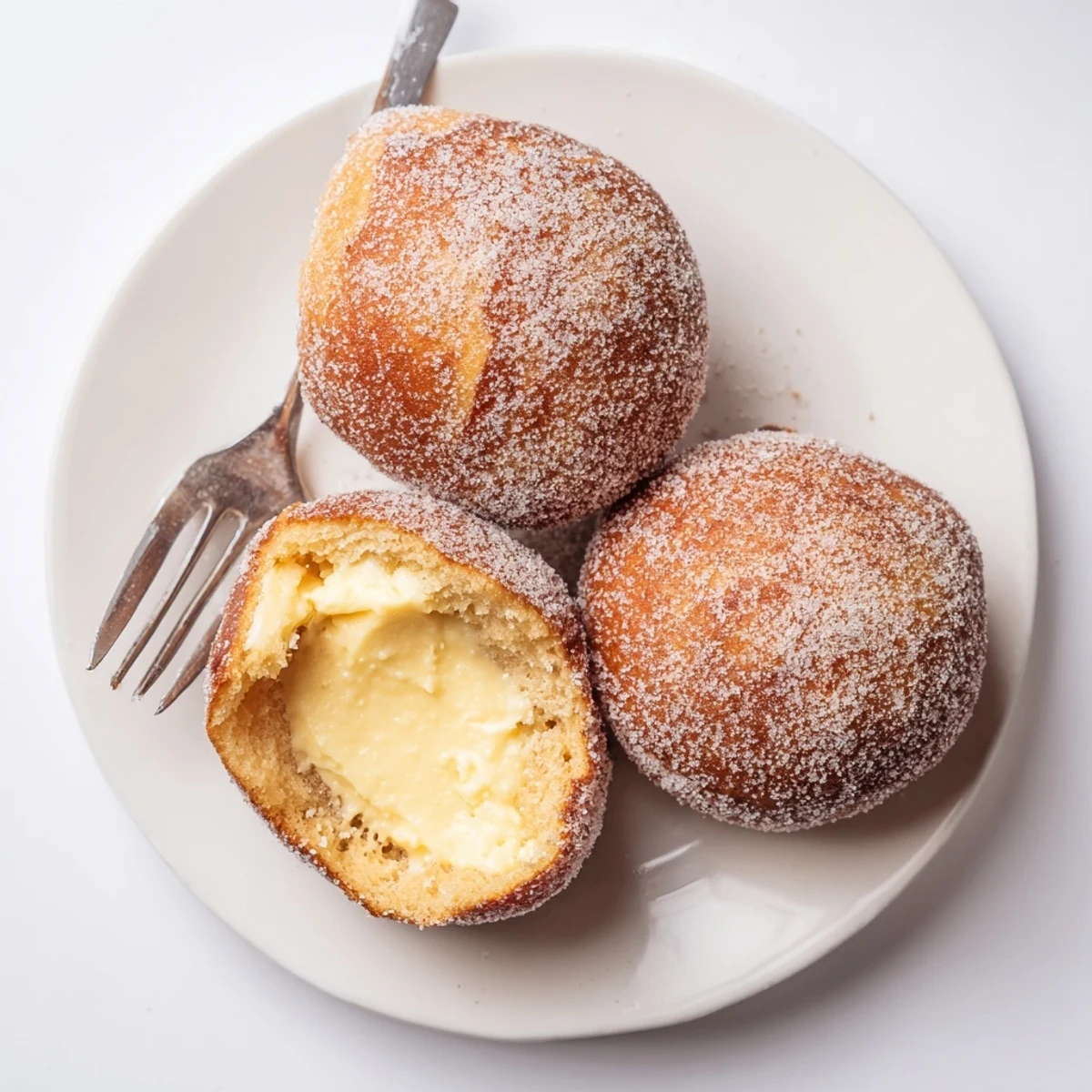
- Load chilled pastry cream into piping bag with long nozzle, poke hole in each bombolone and pipe generously until slightly plump
 Save
Save My friend Marco, who grew up in Rome, told me that the best bomboloni are always eaten standing up at a Italian bar, possibly with tiny flakes of sugar on your shirt. There's something wonderfully unpretentious about them—they're street food elevated to an art form. Now every time I fry a batch, I think of him and his advice about never apologizing for eating more than one.
Getting The Rise Right
The temperature of your kitchen affects rising time dramatically. In winter, I turn my oven on for exactly 90 seconds, then turn it off and place the dough inside—the residual warmth creates the perfect environment. Drafts are the enemy, so find the coziest corner of your kitchen.
Mastering Pastry Cream
The secret to velvety pastry cream is constant whisking during the cooking phase. Even a few seconds of neglect can create lumps that are impossible to smooth out. If you do end up with small lumps, press the cream through a fine-mesh sieve—it saves the batch completely.
Frying Like A Pro
Invest in a kitchen thermometer or learn the visual test: a small piece of dough dropped in should sizzle immediately and rise to the surface within 2 to 3 seconds. Too slow means the oil is not ready. Too vigorous means it's too hot.
- Fry only 3 to 4 at a time to maintain oil temperature
- Let finished bomboloni cool on a wire rack, not paper towels, to prevent sogginess
- Timing matters—fill within 2 hours of frying for best texture
 Save
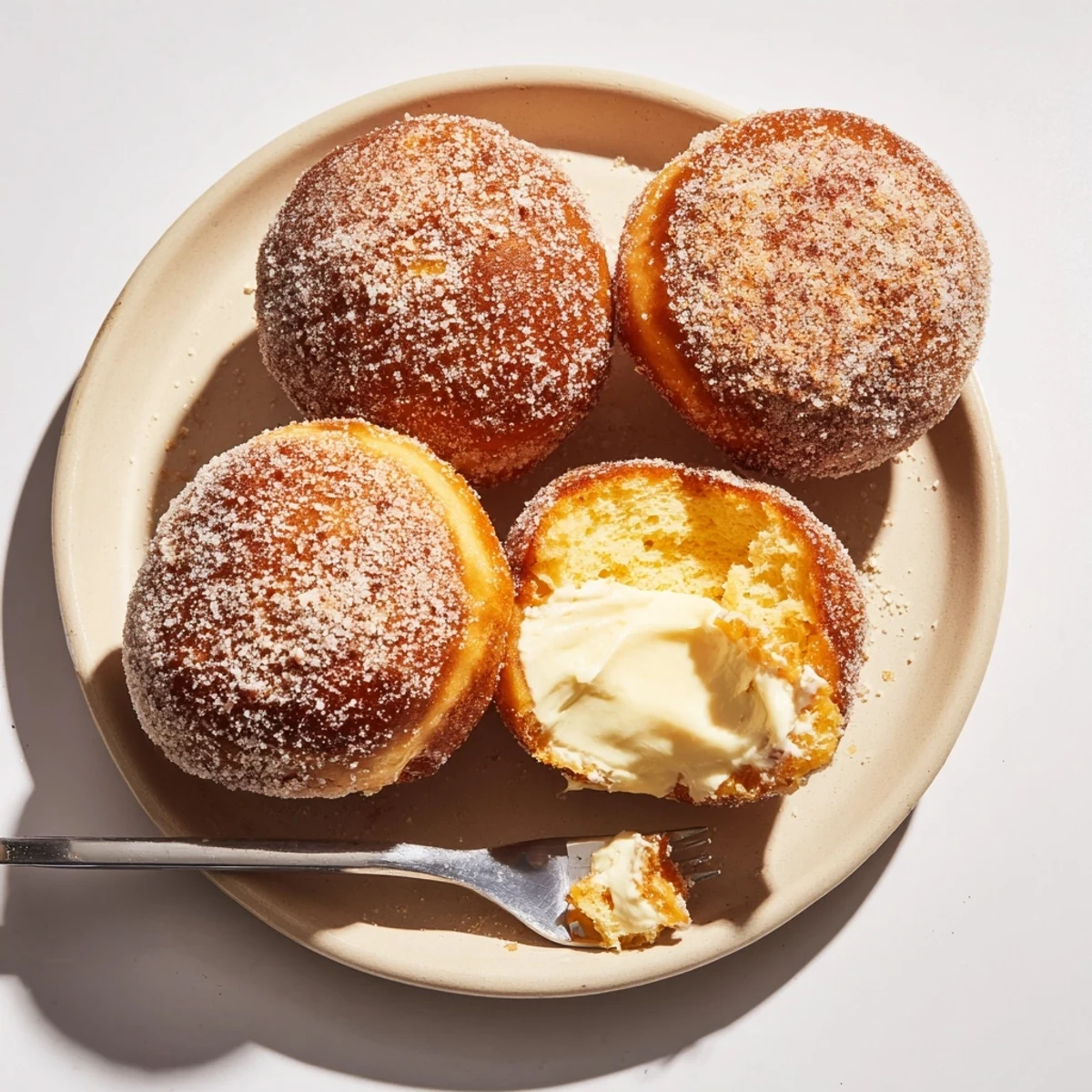
Save There's nothing quite like biting into a warm, sugar-crusted bombolone and tasting that cool, vanilla-scented cream. Make them for someone you love.
Recipe FAQs
- → What makes bomboloni different from regular doughnuts?
-
Bomboloni are lighter and airier than American doughnuts, with a delicate yeast dough that fries up golden. The defining feature is the generous filling of thick pastry cream piped inside after frying, rather than just glaze on top.
- → How long does the dough need to rise?
-
The initial rise takes 1 to 1.5 hours in a warm place until doubled in size. After cutting and shaping, allow 30-40 minutes for the second rise before frying. This two-stage fermentation develops flavor and creates the fluffy texture.
- → Can I make the pastry cream ahead of time?
-
Yes, prepare the pastry cream up to 24 hours in advance. Store it in the refrigerator with plastic wrap pressed directly onto the surface to prevent a skin from forming. Bring to room temperature before piping for easier filling.
- → What's the best oil temperature for frying?
-
Maintain oil at 170°C (340°F) for optimal results. Too hot and they'll burn outside while remaining raw inside; too cool and they'll absorb excess grease. Use a kitchen thermometer for accuracy and fry in batches without overcrowding.
- → How should I store leftover bomboloni?
-
These are best enjoyed fresh within a few hours of frying. If storing, place in an airtight container at room temperature for up to one day. Avoid refrigeration as it makes the dough tough. Reheat briefly in a 160°C oven to restore freshness.
- → Can I use different fillings?
-
Absolutely! While traditional vanilla pastry cream is classic, try chocolate custard, Nutella, fruit jams, or even lemon curd. The frying technique works beautifully with various fillings—just ensure they're thick enough not to leak during piping.